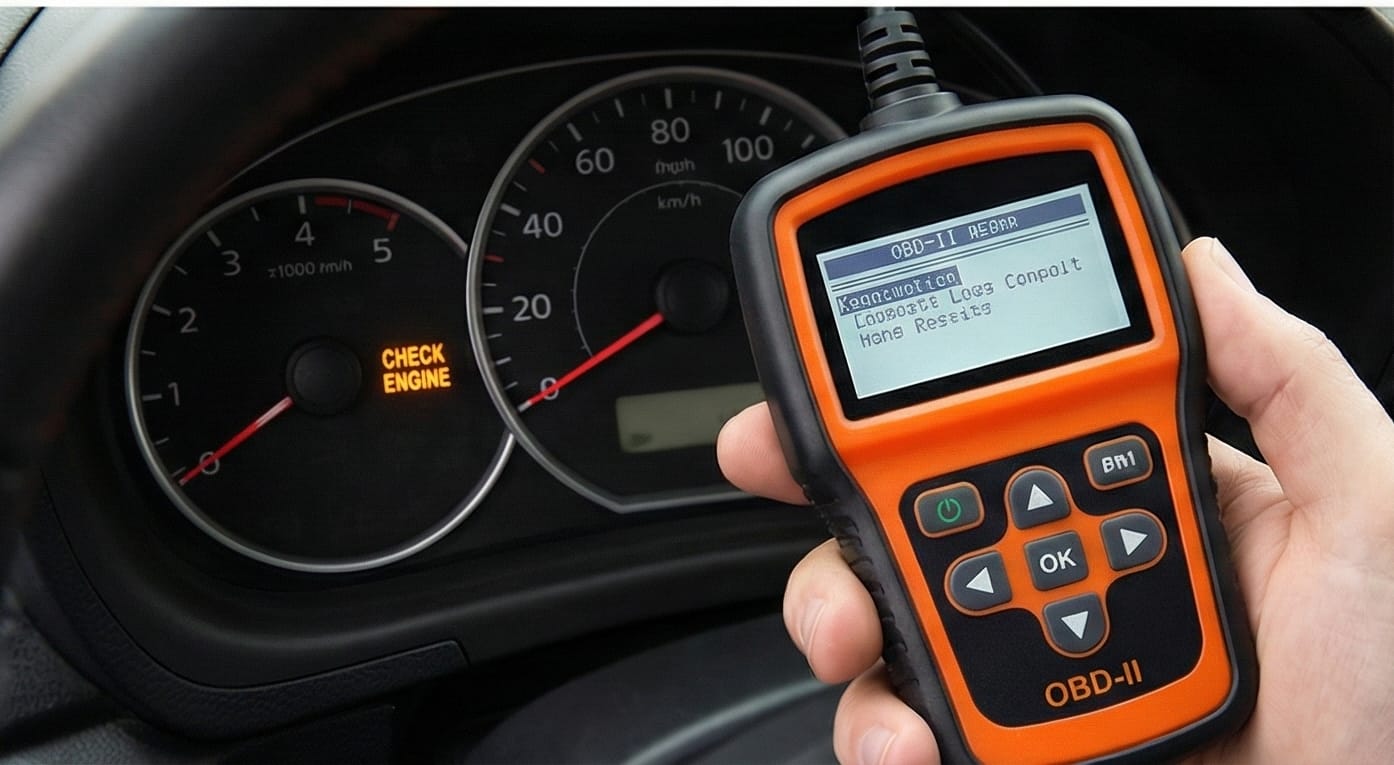
That orange engine-shaped icon on your dashboard can trigger immediate anxiety. But is it an emergency or just a minor issue? Here's everything you need to know about the check engine light.
The check engine light (CEL) is part of your vehicle's On-Board Diagnostics (OBD-II) system. When sensors detect something outside normal parameters, the computer stores a diagnostic trouble code (DTC) and illuminates the warning light.
A steady check engine light indicates an issue that needs attention soon but isn't immediately critical.
Common Causes:
What to Do: Schedule service within a few days.
A flashing check engine light signals a serious problem requiring immediate attention - usually a severe misfire that can damage the catalytic converter.
What to Do:
The Fix: Tighten or replace the gas cap. Drive for a few days - the light should reset itself.
Why It Matters: A loose cap allows fuel vapors to escape, triggering emissions system sensors.
Symptoms:
The Fix: Replace the faulty O2 sensor ($150-$300)
Consequences of Ignoring: Can damage catalytic converter ($1,000-$2,500 repair)
Symptoms:
The Fix: Catalytic converter replacement ($800-$2,500)
Prevention: Regular maintenance and addressing issues promptly
Symptoms:
The Fix: Clean or replace MAF sensor ($120-$400)
Symptoms:
The Fix: Replace spark plugs and/or coils ($100-$500)
❌ Don't Ignore It: Small problems become expensive repairs
❌ Don't Panic: Most CEL issues aren't emergencies
❌ Don't Disconnect the Battery: This erases codes needed for diagnosis
❌ Don't Use "Code Reader Only" Diagnosis: Codes indicate symptoms, not always root causes
✅ Check Gas Cap First: Tighten and verify seal
✅ Note Any Symptoms: Sounds, smells, performance changes
✅ Reduce Speed and Load: Take it easy until diagnosed
✅ Schedule Professional Diagnosis: Get accurate problem identification
✅ Keep Records: Document the issue and repair
A diagnostic scan tool retrieves stored codes from your vehicle's computer.
Example Codes:
A code indicates where to look - not always what's wrong. Professional technicians:
After repairs:
Steady Light:
Flashing Light:
No. Texas state inspection requires:
Pro Tip: Some monitors require specific driving cycles to reset. Ask us about the drive cycle needed for your vehicle.
1. Regular Maintenance: Follow your vehicle's service schedule
2. Quality Fuel: Use top-tier gasoline
3. Prompt Repairs: Fix small issues before they become big ones
4. Proper Gas Cap: Ensure it clicks 3 times when tightening
5. Quality Parts: Use OEM or quality aftermarket parts
Myth: "The light will reset itself"
Truth: While codes may clear after 40-80 drive cycles, the problem remains
Myth: "I just need to clear the codes"
Truth: Codes will return if the problem isn't fixed
Myth: "It's probably just the gas cap"
Truth: Only 10% of cases are gas cap-related
Myth: "The repair shop is trying to scam me"
Truth: Professional diagnosis prevents misdiagnosis and unnecessary repairs
Our comprehensive diagnostic service includes:
Starting at just $135
Seek immediate help if you experience:
Don't let that check engine light become a major expense. Our expert technicians use the latest diagnostic equipment to quickly and accurately identify the problem.
Schedule your diagnostic appointment today:
Remember: Early diagnosis saves money. That $89 diagnostic fee can prevent thousands in unnecessary repairs or damage.
Trust Snappee Auto Care - where 33+ years of experience means accurate diagnosis the first time!
Our expert technicians are ready to help. Call us today or schedule your appointment online.